![]() |
|
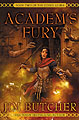
Cursor's Fury
Book Three of the Codex Alera
Since the Second Battle of Calderon, only the courage, determination and sacrifice of loyal subjects of the realm of Alera have prevented the unthinkable—a civil war that could leave Alera in ruins, devestated and vulernable to its enemies. Loyal Alerans have given their blood and lives to preserve the realm. It was not enough. Though the insurrection of the High Lords against the First Lord, Gaius Sextus, has been delayed for several years, it has only been the calm before the storm. Civil war shatters the realm. Now, the power-hungry High Lord of Kalare has launched a merciless, devastating rebellion against Gaius. Caught off guard by the sheer power of Kalare's attack, Gaius Primus and the loyal forces of Alera must fight for the survival of the realm, beside the most dangerous of allies—the equally rebellious and power-hungry High Lord and Lady of Aquitaine. Trapped in the besieged city of Ceres, Isana of Calderon survives the attack of Kalare's assassins, and must fight to save the life of the wounded slave, Fade, poisoned while defending Isana from her attackers. The secrets of her past loom large in deed and memory, as she at last confronts the dark truths of her own past. Countess Amara, Cursor to the First Lord, must carry out a desperate rescue operation, freeing hostages taken by Kalare and held against the military neutrality of loyal High Lords. The survival of the realm could hinge on the success of her mission: but is her ally, Lady Aquitaine, sincere in her efforts to assist—or will she betray the young Cursor and the First Lord she serves? Sent away from the theater of the civil war by a protective First Lord, young Tavi of Calderon joins the newly formed First Aleran Legion as its juniormost officer under an assumed name as a spy for the First Lord—but when civil war erupts, Tavi's captain learns that Kalare has done the unthinkable; allied himself to the Canim, a merciless, terrifying enemy of the realm, who have arrived in numbers more vast than any in history. When treachery from within its ranks destroys the command structure of the First Aleran, the young Cursor finds himself in command. The First Aleran is friable, undertrained, poorly equipped; and it is the only force standing between the Canim horde and the heart of war-torn Alera. Coming in hardcover from Ace publishing, December 2006.
Special Preview!
Throughout the next several weeks, we'll be posting preview chapters of Cursor's Fury, with at least one new chapter every Thursday through the rest of of September and into October (running from the Prologue to Chapter Five). You can find the full text of the previews posted so far here. The latest update will appear below. Chapter Five Isana awoke to a sensation of emptiness in the
rough straw mattress beside her. Her
back felt cold. Her senses were a
confused blur of shouts and odd lights, and it took her a moment to push away
the sleepy disorientation enough to recognize the sounds around her. Boots raced on hard earth, the steps
of many men. Grizzled centurions
bellowed orders. Metal scraped on metal,
armored legionares walking together, brushing one
another in small collisions of pauldrons, greaves,
swords, shields, steel armor bands.
Children were crying. Somewhere,
not far away, a war-trained horse let out a frantic, ferocious scream of panic
and eagerness. She could hear its
handler trying to speak to it in low, even tones. A breath later, the tension pressed
in on her watercrafter’s senses, a tidal flood of
emotion more powerful than anything she had sensed in the dozen or so years
since she and Rill, her water fury, had found one
another. Foremost in that vicious surge
was fear. The men around her were
terrified for their lives—the Crown Legion, the most experienced, well-trained
force in Alera, was drowning in fear. Other emotions rushed with it. Primarily excitement, then
determination and anger. Beneath
them ran darker currents of what she could only describe as lust—and of another
emotion, one so quiet that she might not have noticed it at all but for its
steady and growing presence; resignation. Though she did not know what was
happening, she knew the men of the legion around her were preparing to die. She stumbled up off the mattress,
dressed in nothing but her skin, and managed to find her blouse, dress, and
tunic. She twisted her hair into a knot,
though it made her shoulders and back ache abominably to do it. She took up her plain woolen cloak and bit
her lip, wondering what she should do next. “Guard?” she called, her voice tentative. A man entered the large tent
immediately, dressed in armor identical to that worn by the rest of the legionares, save perhaps for sporting an inordinate number
of dents and scratches. His presence was
a steady mix of perfect confidence, steely calm, and controlled, rational
fear. He stripped his helmet off with one
hand, and Isana recognized Araris
Valerian, personal armsman to the Princeps. “My lady,” he said,
with a bow of his head. Isana felt
her cheeks flush and her hand drifted to the silver chain around her throat,
touching the ring that hung upon it beneath her clothing. Then she moved it down, to rest on the round,
swollen tightness of her belly. “I’m
hardly your lady,” she told him. “You
owe me no fealty.” For a moment, Araris’
eyes sparkled. “My lady,” he repeated,
with gentle emphasis. “My lord’s duties
press him. He bid me find you in his
stead.” Isana’s
back twinged again, and if that wasn’t enough, the
baby stirred with his usual restless energy, as though he heard the sounds in
the night and recognized them. “Araris, my sister . . .” “Already here,” he said, his tone
reassuring. The unremarkable-looking
young man turned to beckon with one hand, and Isana’s
little sister hurried into the tent, covered in Araris’
own large grey traveling cloak. Alia flew
to Isana at once, and she
hugged her little sister tightly. She
was a tiny thing who had taken after their mother, all sweetness and feminine
curves, and her hair was the color of fresh honey. At sixteen, she was an aching temptation to
many of the legionares and men among the camp followers,
but Isana had protected her as fiercely as she knew
how. “Isana,” Alia panted, breathless.
“What’s happening?” Isana was
nearly ten years her sister’s senior. Alia’s furycrafting talents, like
Isana’s, ran to water, and she knew that the girl
would hardly be able to remember her own name under the pressure of the
emotions rising around them. “Hush, and remember to slow your
breathing,” she whispered to Alia, and looked up at Araris. “Rari?” “The Marat
are attacking the valley,” he replied, his voice calm
and precise. “They’ve already breached
the outpost at the far end and are marching this way. Horses are being brought for you. You and the other freemen of the camp are to
retreat toward Riva at all speed.” Isana drew
in a breath. “Retreat? Are the Marat
really so many? But
why? How?” “Don’t worry, my
lady,” Araris said.
“We’ve handled worse.” But Isana
could see it in the man’s eyes, hear it quavering in
his voice. He was lying. Araris
expected to die. “Where?”
she asked him. “Where is he?” Araris
grimaced and said, “The horses are ready, my lady. If you would come this w—“ Isana
lifted her chin and strode out past the armsman,
looking left and right. The camp was in
chaos—or at least, the followers in the legion’s camp were. The legionares
themselves were moving with haste, with anxiety, but also with precision and
discipline, and Isana could see the ranks forming
along the palisade around the camp. “Do
I need to go find him myself, Rari?” His tone remained even and polite,
but Isana could sense the fond annoyance behind his
reply. “As you wish,
my lady.” He turned to the two
grooms holding the reins of nervous horses nearby, flicked a hand and said,
“You two, with me.” He started striding
toward the eastern side of the camp.
“Ladies, if you will come this way.
We must make haste. I do not know
when the horde will arrive, and every moment may be precious.” And it was then that Isana saw war for the first time. Arrows flew from the darkness. One of the grooms screamed, though he was
drowned out by the cries of the horse whose reins he held. Isana turned, her
heartbeat suddenly a thunder in her ears, everything moving slowly. She saw the groom stagger and fall, a
white-feathered Marat arrow protruding from his
belly. The horse screamed and thrashed
its head, trying to dislodge the arrow sunk into a long line of muscle in its
neck. Cries came from the darkness. Marat warriors,
pale-haired, pale-skinned, erupted from the beds of supply wagons brought into
the camp earlier in the afternoon, brandishing weapons of what looked like
blackened glass and stone. Araris turned and moved like lightning. Isana could only stare in shock as three more arrows flickered toward her. Araris’ sword shattered them to splinters, and a casual flick of one his steel-encased hands prevented even those from striking her face. He met the group of howling Marat, and walked through them like a man in a crowded market, shoulders and hips twisting, bobbing up onto his toes to slide between passersby, turning a neat pirouette to avoid stumbling over something on the ground. When he stopped, every
one of the Marat lay on the ground, food for the
crows. He flicked his sword to one side,
cleaning it of blood, sheathed it, and extended his hand as though nothing of
note had happened. “This
way, my lady.” * * * * * “This way, my lady,” murmured a low, richly masculine voice, “we needn’t worry about being too long parted. I’m sure you can see the advantages.” Isana jerked her head up from where she had dozed off in
the comfortable seating within the litter the She was sick of it. And yet the dreams also restored to her those brief moments of joy, the heady excitement of those springtime days of youth. For those few seconds, she did not know what she did now. She had a sister again. She had a husband. Love. “I just bought you a brand new girl, Attis,” teased a woman’s voice from outside the litter, the tone clear and confident. “You’ll be amused until I return.” “She’s lovely,” said the man. “But she’s not you.” His tone turned wry. “Unlike the last one.” The door to the air coach opened, and Isana had to call upon Rill to halt tears from filling her eyes. Isana’s fingers touched the shape of the ring beneath her blouse, still on the chain around her neck. Unlike herself, it had remained bright and untarnished by the passage of years. She shook away the remnants of the dream as best she could and forced her thoughts back to the moment. High Lord Aquitainus Attis, who five years
ago had perpetrated a plot resulting in the deaths of hundreds of her neighbors
in the “Steadholder,” he said politely, nodding to Isana. She nodded back to him, though she felt her neck stiffening as she did. She did not trust herself to sound civil when speaking to him, and so remained silent. “I quite enjoy my holidays abroad,” murmured the woman, her voice now near at hand. “And I am perfectly capable of looking after myself. Besides. You have your own work to do.” The woman entered the coach and settled down on the opposite bench. High Lady Aquitainus Invidia looked every inch the model of the elite Citizenry, pale, dark-haired, tall and regal. Though Isana knew that Lady Aquitaine was in her forties, like her husband and Isana herself, she looked barely twenty. Like all blessed with sufficient power at watercrafting, she enjoyed the ongoing appearance of youth. “Good evening, Isana.” “My lady,” Isana murmured.
Though she had no more love for the woman than she did for Lord Invidia turned to her husband and leaned forward to kiss him. “Don’t go staying up to all hours. You need your rest.” He arched a golden brow. “I am a High Lord of Alera, not some foolish academ.” “And vegetables,” she said, as if he hadn’t spoken. “Don’t gorge yourself on meats and sweets and ignore your vegetables.” She smiled sweetly at him. He rolled his eyes, gave her a quick kiss, and said, “Impossible woman. Very well, have it your way.” “Naturally,” she said. “Farewell, my lord.” He inclined his head to her, nodded at Isana, shut the door and withdrew. He thumped the side of the litter twice and said, “Captain, take care of them.” “My lord,” replied a male voice from outside the door, and the Knights Aeris lifted the litter. The winds rose to the low, steady roar that had become familiar to Isana in the last two years, and unseen force pressed her against her seat as the litter leapt into the skies. Several
moments passed in silence, during which Isana leaned
her head against her cushion and closed her eyes, in the hopes that the
pretense of sleep would prevent the need for conversation with Lady “I
apologize for the length of the trip,” Lady Isana did not voice the thought that it was still a great deal higher than a walk along the ground. “Does it make a difference?” she asked without opening her eyes. “It is more
difficult to stay aloft closer to the earth, and more difficult to fly
quickly,” Lady Isana sighed. “How much longer?” “Most of three weeks, I am told. And that is an optimistic estimate which assumes fresh teams of Knights Aeris await us at way stations.” Three
weeks. Rather too long a time to pretend
to be asleep without openly insulting her patron. Though Isana knew
her value to the Lady “Of course not, my lady,” Isana said. “Why would I do such a thing?” Invidia’s eyes hardened for a moment. Then she said, “I am given to understand that you plan a small reunion with your family in Ceres.” “After the meeting with the League, of course,” Isana said. “I have been assured of alternate travel arrangements back to Calderon, if my plans should inconvenience you.” Invidia’s cool features blossomed into a small, even genuine smile. “Hardly anyone fences with me any more, Isana. I’ve actually looked forward to this trip.” “As have I, my lady. I have missed my family.” Invidia laughed again. “I shall ask little of you beyond our visits with my supporters and the League meeting,” she said. Then she tilted her head to one side and leaned forward slightly. “Though you have not been apprised of the meeting’s agenda.” Isana tilted her head. “Gracchus Albus and his staff have been invited to attend.” “The Senator Primus,” she murmured. Then her eyes widened. “The emancipation proposal to the Senate?” Lady “They should spend time running a Steadholt,” Isana said, her tone wry. “It makes one acutely aware of the extended consequences of small but significant actions.” The High Lady moved one shoulder in a shrug. “Perhaps you are correct.” “Will Gracchus support the proposal?” “He has
never been a foe of the abolitionist movement.
His wife, daughter and mistresses assure me that he will,” Lady Isana frowned. She disapproved of such manipulations, though it was the Dianic League’s first and favorite tool. “And the Senate?” “Impossible
to say for certain,” Lady Isana frowned in thought. It was indeed a worthy goal, and one which would rally the support of folk of conscience everywhere. Slaves in most of the realm faced a grim lot in life -- hard labor and little chance of ever working their way free, even though the law required owners to sell a slave’s freedom should he ever earn his (or her) buying price. Female slaves had no recourse to the uses their bodies were put to, though neither did males, when it came to it. Children were all born free, legally at least, though most owners employed various forms of taxation or indenture for them which amounted to outright enslavement from birth. The laws of
the realm were supposed to protect slaves, to limit the institution to those
who had been willing to enter bondage and who could, in time, repay their
indenture and walk free again. But
corruption and political influence allowed each High Lord to virtually ignore
the laws and to treat slaves in whatever fashion each saw fit. In the time since she had become Lady The Dianic League, an organization consisting solely of female Citizens of the realm—those with status, influence, but little actual, legal power--had struggled for years to engender support for the abolishment of slavery. For the first time, they were in a position to cause it to be, for while the High Lords and the First Lord controlled the military assets of the Realm, the criminal codes of Alera, and the enforcement of civil law, it was left to the elected Senate to create and administrate those laws. Slavery had been a civil institution since its inception, and the Senate had the power to pass new laws regarding slavery – or to abolish it altogether. The Dianic League considered it the first step toward gaining legal parity for the women of the realm. Isana frowned. Though Lady Invidia had always been true to her word and her obligations as patron, Isana harbored no illusions that she had any personal interest in emancipation. Even so, it was difficult for Isana to resist the inherent lure in the accomplishment of such a dream, the destruction of such an injustice. But then,
she was hardly in any condition to think with the cool, detached logic required
by politics. Not with a reunion with her
loved ones so near at hand. Isana wanted nothing so much as to see Tavi
again, whole and well -- though the uncomfortable silences resulting from slips
in conversation, when one of them mentioned something loosely related to
politics or loyalty made it a somewhat bittersweet proposition. She wanted to speak with her brother again. Between running the steadholt
and the infrequent but regular voyages from her home on behalf of Invidia The irony
in traveling halfway across the Realm to break bread with them again – and
taken there by the Even so, Isana forced herself to push her family from her thoughts
and to regard the situation with detached intellect. What did the “This isn’t about freedom,” she murmured aloud. “Not for you. It’s about crippling Kalare’s economy. Without slave labor, he’ll never profit from his farmlands. He’ll be too busy fighting to remain solvent to rival your husband for the Crown.” Lady Isana did not let her eyes waver from her patron’s. “Perhaps it’s just as well that many in the League do not perceive as much as I do.” Lady “Yes. As I promised,” Isana said. She leaned back in her seat and closed her eyes again. “Nothing I do can stop you from scheming. If some good can be accomplished along the way, I see no reason not to attempt it.” “Excellent,”
Lady “I read,” she said, not needing to falsify the weariness in her voice. “Nothing more.” Isana used years of practice and experience to keep any expression from her face, but in the wake of the dream, it was almost painfully difficult to prevent her hand from rising to touch the outline of the ring hanging over her heart. There was
another long silence, and then Lady The weight
of her attention passed, and Isana almost sagged with
relief. It was dangerous, lying to the
High Lady, whose talent for watercraft and thus for sensing lies and deceptions
was greater than even Isana’s own. The woman was capable of torture, of murder,
even if she preferred to use less draconian tactics. Isana had no
illusions that those preferences were the result of practical logic and
self-interest, rather than ethical belief.
If necessary to her plans, Lady Should it ever come to that, Isana would die before speaking. Because some secrets had to be kept. At any price. Cursor's Fury will be available in bookstores in December 2006. |